
For the use of a Registered Medical Practitioner, Hospital or Laboratory only.
1. Description
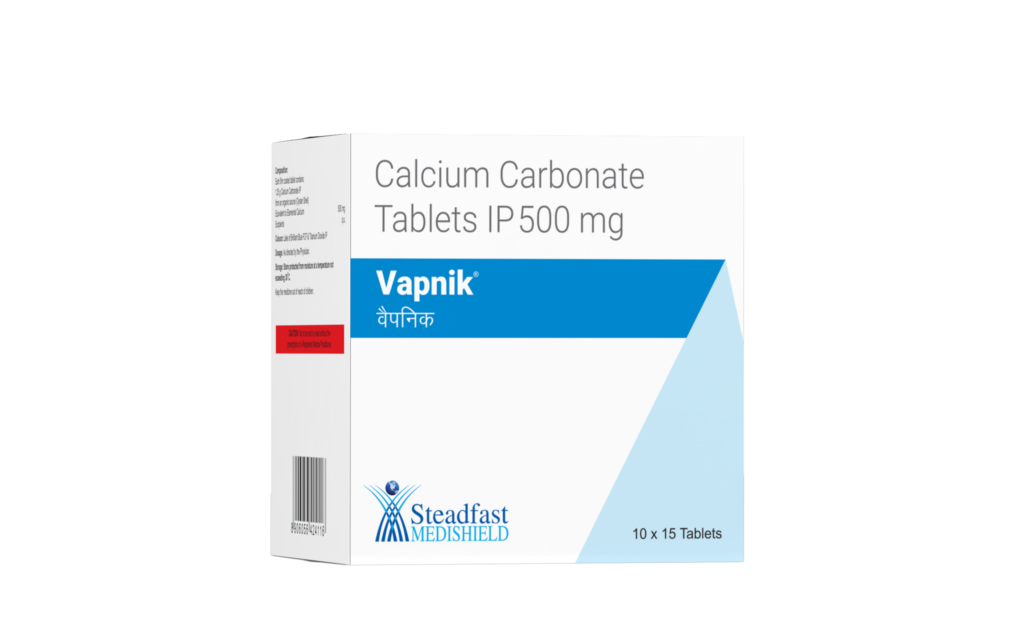
Vapnik contains calcium carbonate from oyster shell. Calcium carbonate contains 40% elemental calcium; therefore, a 1250 mg tablet of calcium carbonate provides 500 mg of calcium.
Calcium is the fifth most abundant element in the body. Calcium is an important structural component of bone and teeth and is also necessary for the normal functioning of all muscles (skeletal, heart and smooth muscles) and nerves as well as the normal clotting of blood. Prolonged, inadequate intake of Calcium causes weak bones. Calcium can also bind to other minerals (such as phosphate) and aid in their removal from the body.
2. Composition
Each film coated tablet contains:
- Calcium Carbonate IP 1.25 g, from oyster shell, equivalent to Elemental Calcium – 500 mg
- Excipients – q.s.
Colours: Lake of Brilliant Blue FCF & Titanium Dioxide IP
3. Dosage Form
Tablet
4. Pharmacology
Pharmacodynamics
Vapnik contains Calcium Carbonate, an oral phosphate binder indicated for the management of hyperphosphataemia, particularly in patients with chronic kidney disease (CKD) receiving dialysis.
Calcium carbonate acts by binding dietary phosphate in the gastrointestinal tract, forming insoluble calcium phosphate complexes that are excreted in the faeces. This reduces intestinal phosphate absorption, thereby lowering serum phosphate concentrations. Reduction of hyperphosphataemia helps decrease secondary hyperparathyroidism and may reduce the risk of renal osteodystrophy and extraskeletal calcification associated with chronic kidney disease.
In addition to its phosphate-binding effect, calcium carbonate serves as a source of elemental calcium, contributing to the maintenance of calcium balance. However, excessive calcium intake may increase the risk of hypercalcaemia; therefore, serum calcium and phosphate concentrations should be monitored during therapy.
Pharmacokinetics
Absorption
Calcium carbonate is partially dissolved in the acidic environment of the stomach, releasing calcium ions.
Approximately 15–40% of elemental calcium is absorbed from the gastrointestinal tract under normal physiological conditions.
Calcium absorption is enhanced by vitamin D and gastric acidity and decreases in patients with reduced gastric acid secretion.
When used as a phosphate binder, a substantial proportion of calcium remains within the gastrointestinal tract, where it binds dietary phosphate and is excreted.
Distribution
Absorbed calcium is distributed throughout the extracellular fluid and is deposited primarily in bones and teeth.
Approximately 99% of total body calcium is stored in the skeletal system.
Plasma calcium exists in three forms:
Protein-bound (~40%)
Complexed with anions (~10%)
Ionized (free) calcium (~50%), which is the physiologically active form.
Metabolism
Calcium carbonate is not metabolized.
It dissociates into calcium and carbonate ions in the stomach. Carbonate is converted to carbon dioxide and water, while calcium enters normal physiological calcium homeostasis.
Elimination
Unabsorbed calcium is excreted primarily in the faeces.
Absorbed calcium is eliminated mainly via the kidneys, with urinary excretion regulated by parathyroid hormone (PTH), vitamin D, and calcitonin.
Small amounts are also lost through sweat and gastrointestinal secretions.
5. Indications
Vapnik is recommended to bind and remove excessive phosphate and to increase the intake of calcium in individuals whose diets are low in calcium for preventing and treating osteoporosis.
6. Contraindications
Vapnik (Calcium Carbonate Tablets) is contraindicated in patients with:
Known hypersensitivity to calcium carbonate or any of the excipients in the formulation.
Hypercalcaemia (elevated serum calcium levels).
Hypercalciuria (excessive urinary calcium excretion).
Nephrolithiasis (calcium-containing kidney stones) or a history of recurrent calcium stone formation.
Severe renal calcification (nephrocalcinosis).
Conditions associated with hypervitaminosis D, unless under close medical supervision.
Patients with severe hyperphosphataemia accompanied by hypercalcaemia, where additional calcium administration may increase the risk of metastatic or vascular calcification.
Sarcoidosis or other granulomatous disorders associated with increased vitamin D activation, due to an increased risk of hypercalcaemia, unless prescribed and monitored by a physician.
7. Precautions
Avoid taking more doses than recommended.
Missed dose: If you miss a dose, take it as soon as you remember. Do not take it if it is near the time for the next dose. Instead, skip the missed dose and resume your usual dosing schedule. Do not ‘double-up’ the dose to catch up.
Pregnancy: Use of calcium supplements during pregnancy appears to be safe.
Nursing Mothers: Calcium supplements are safe when used by nursing mothers. Do not eat large amounts of bran or wholegrain cereals and breads. They may reduce absorption of calcium. Also, consuming alcohol, large amounts of caffeine and tobacco smoking may affect the absorption of calcium. Do not start or stop any medicine without your doctor’s approval.
8. Drug Interactions
Calcium may interact with or make it harder for your body to absorb certain drugs especially:
- Digoxin
- Antacids or other calcium supplements
- Calcitriol or vitamin D supplements
- Tetracycline, Demeclocycline, Doxycycline, Minocycline or Oxytetracycline
To prevent this interaction, doses of quinolone and tetracycline antibiotics should be separated by three or more hours from doses of calcium.
Calcium reduces acidity in the stomach, though there may be a rebound phenomenon which causes a greater than normal amount of acid to be produced after the initial acid-reducing effects of the calcium wears off. The reduction of acid decreases the absorption of iron from the intestine. Therefore, doses of calcium and iron should be separated by several hours.
9. Adverse Effects
Calcium is generally well tolerated. High levels of calcium can cause nausea, vomiting, loss of appetite, constipation, stomach pain, thirst, dry mouth and increased urination. Severe hypercalcaemia may cause confusion, delirium, stupor and coma.
10. Dosage & Administration
The usual recommended dose of Vapnik for adults is one tablet thrice a day with meals.
11. Overdosage
No data available.
12. Storage
Store protected from moisture at a temperature not exceeding 30°C. Keep the medicine out of reach of children.
13. Presentation
15 tablets in a strip, 10 strips in a box.